
Forget online shops: playable experiences are the next big thing
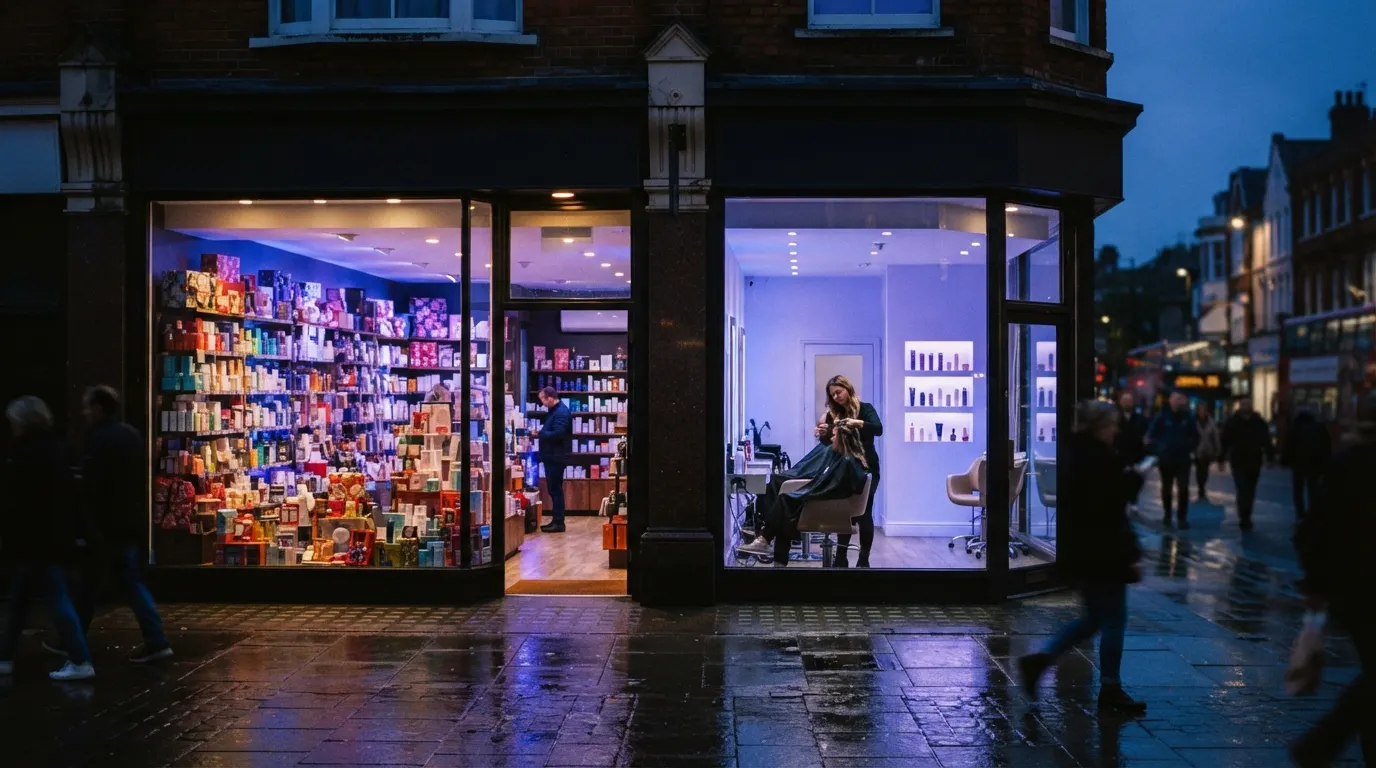
A playable shopping experience is an online shop you explore rather than scroll. You walk round a 3D room, lean over the cases, look closely at a piece and add it to your bag. For a brand with a story and a small range, it does what a product grid can't: people play with it, remember it and share it.
We think this is where a lot of online retail is heading. The product grid has barely changed in years, and it works. But it's built to be used, not shared. Nobody sends a friend a category page with "you have to see this".
So we built one for our own jewellery brand, Elle Adore. The Boutique is a walk-through jewellery house in the browser, and it went live on 27 November 2026. It's an experiment in viral marketing: a completely new kind of experience, made to stop the scroll and to be shared, not just a nicer product page.
What is a playable shopping experience?
It's a shop you move through. Instead of a page of thumbnails you get a space and things to discover, with the products sitting where they would in a real shop. The buying still works the way people expect: a bag, a total and a normal checkout.
It's not the same as adding a 3D model to a product page. A spinning model answers "what does the back look like?". A playable shop answers "what is it like inside this brand?". The second is a reason to visit and tell someone. Our guide to when 3D websites convert covers the first kind, along with the technical basics of building any 3D page well.
Why does a playable shop make sense now?
Two things have changed. The first is that ordinary phones can run it. The boutique is built on WebGL 2, the browser's 3D graphics standard, and MDN marks it as Baseline "widely available", working across browsers since September 2021. That includes phone browsers. No app, just a link.
Sources: MDN, WebGL2RenderingContext.
The second is how small brands get attention. A lot of it arrives as a link: in a bio, a story, a group chat. A product page asks for a decision. A place you can walk round only asks for a minute of curiosity, and gives people something to say when they pass it on. That's the bet. The experience earns the share, and the share brings people to the shop.
What did we build for Elle Adore?
You arrive at the doors of a jewellery house: a marble floor, tall arched windows, gilded frames and crystal chandeliers. Glass cases run down both long walls, rings and earrings on one side, necklaces and bracelets on the other. Under the dome in the middle, the design-your-own solitaire turns slowly on its pedestal, cycling through its stones. The counter is at the far end, where you'd pay in a real shop.
Walk up to a case and lean over it, and the piece in front of you is named with its price. Take a closer look and it lifts out of the case and floats in front of you. You can turn it and zoom in, while a panel beside it shows the shop's photos, a short description, the options (ring size, stone, colour) and an add to bag button.
Every product has its own modelled piece, built in code from what the product is and the options it comes in. A pear cut ring looks different from a round one, and gold catches the light differently from silver. None of the pieces in the cases is a flat photo pretending to be 3D.
How does a 3D boutique connect to Shopify?
A beautiful room that can't take an order is only a demo. The boutique isn't a second shop. It's a front door to the real one.
- The products come from the shop. A short script reads the store's public product feed, keeps everything that's in stock, and builds the titles, prices, options and photos into the boutique. Run it again after a change in Shopify and the cases match the shop.
- Checkout is Shopify's. The bag hands its contents to the store with a Shopify cart permalink: a link that lists each item and quantity and opens a checkout with them already added. Payment, delivery and the order confirmation all run through the normal Elle Adore shop.
- Visits from the boutique are tagged. Every link back to the shop carries a campaign tag, so visits and sales that started in the boutique can be picked out in the shop's analytics.
- There's always a way out. Every piece links to its normal product page. If the 3D is slow to load, a link offers the online shop instead. If a browser can't open it at all, the page says so and sends people to the shop rather than leaving them on a loading screen.
Sources: Shopify Help Centre, cart permalinks.
Does it work on a phone?
It had to. The links we share go out on Instagram and TikTok, and those get tapped on phones. On a phone, your left thumb works an on-screen joystick to walk, dragging looks around, and tapping a piece takes a closer look.
A few less visible choices help on an everyday handset:
- It starts light. Phones begin on the lowest graphics setting, and the boutique drops a level by itself if the first few seconds of walking run slowly.
- It expects the in-app browser. A link tapped inside Instagram or TikTok opens in that app's own browser, where new tabs are unreliable. So on a phone, checkout opens in the same tab, and the bag is saved in case someone comes back.
- Most of the look is made in code. The marble, the floor and the ceiling are generated in the browser rather than downloaded as large image files, which keeps the wait down.
Which brands should build one, and which shouldn't?
A playable shop suits brands where the feeling is part of what people buy.
- Brands with a story or a world. A candle maker, a perfumer, a bakery with a shopfront people recognise, a fashion label with a look of its own.
- Gifts. Jewellery, watches, ceramics, prints. Gift buyers often don't know exactly what they want, and a shop that's enjoyable to wander suits that.
- Small ranges. Tens of products, not thousands. Every piece gets a place.
- Launches and seasons. A new collection, a Christmas edit, a pop-up that only exists online for a month.
It doesn't suit:
- Big catalogues and everyday buys. A supermarket, a pet food shop, a parts supplier. Their customers know what they want and need search, filters and a reorder button, not a stroll.
- Price-led shopping. If people compare you on price and delivery time, a room to walk round just gets in their way.
- Urgent needs. Nobody wants to explore a shop floor to buy a replacement charger.
- A shop that isn't working yet. If the normal store has slow pages, thin photos or a confusing checkout, fix those first. Every boutique visitor ends up there.
What results has it had so far?
None yet. The boutique went live on 27 November 2026, so it's too early for numbers. We'll add them here once there are some worth sharing.
The boutique counts, without cookies, how many people come in, how many pieces they take a closer look at, how often the bag is opened and how many people reach checkout. The tagged links show which orders started there. The test isn't whether a 3D room beats a product grid visit for visit, because the grid is still there for anyone who prefers it. The test is whether people share it, and whether the people who arrive that way buy.
How do you start a playable shop small?
You don't need a palace. The first version can be one room and a handful of products.
- Pick your hero products. Five to ten pieces that sum up the brand. Save the best spot for the one you most want people to see.
- Build one room that looks like your brand. Your colours, your materials, your kind of light. It should be recognisable in a screenshot, because the screenshot is what gets shared.
- Plug it into the shop you already have. Pull the products from Shopify and send the bag to Shopify's checkout. Don't build a second store.
- Design for the thumb first. Test on an ordinary phone, inside the Instagram and TikTok browsers, before you look at it on a big screen.
- Always offer the normal shop. Keep a visible link out for anyone who'd rather browse the usual way.
- Tag and count from day one. Decide what success looks like (shares, closer looks, orders) before launch, so you can tell whether it's working.
Before you commission one: decide where the link is going to go out. A playable shop without a launch plan is a lovely room nobody visits. Ours was built to be posted and shared, so the phone and the screenshot came first.
You can walk round the Elle Adore boutique yourself and compare it with the shop. If your brand has a story and a small range that deserves a room of its own, Click Fusion Cloud builds playable shops on top of Shopify through our Shopify design and development service. Get a fixed quote and we'll tell you honestly whether it's worth it for you.
Quick answers
What is a playable shopping experience?
It's an online shop you explore rather than scroll: you walk round a 3D room in the browser, look closely at products and add them to a bag. It's built to be remembered and shared, while checkout still runs through a normal online store.
Does a 3D shop replace my Shopify store?
No. A good one is a front door to your existing store: it pulls products from Shopify and hands the bag to Shopify's own checkout with a cart permalink, so payments, delivery and orders stay where they are.
Do playable shops work on phones?
Yes, if they're designed for phones first. The Elle Adore boutique uses an on-screen joystick, starts on low graphics on phones, and runs on WebGL 2, which MDN lists as widely available across browsers since September 2021.
Which businesses suit a playable shop?
Brands with a story, gift products and small ranges of tens of products, not thousands. Big catalogues, everyday or urgent buys and price-led shops are better served by a fast, searchable product grid.
Want this done for you?
Shopify Design & Development from Click Fusion Cloud
Built by our studio in Hertford, Hertfordshire, for businesses across the UK.
See our shopify design and development service