Can you really make passive income on the internet in 2026?
Yes, but rarely in the way the adverts promise. Income from the internet can become low-touch: you do most of the work up front, building a course, a shop or an app, and each sale after that takes little of your time. Truly passive income, with no ongoing work at all, is rare.
What do the passive income gurus leave out?
The pitch is familiar. A screenshot of a sales dashboard. A laptop on a balcony. A promise that the money arrives while you sleep. Quite often the product being sold is a course about how to make money selling courses.
Plenty of people teaching online are honest and good at what they do. The trouble is what tends to be missing from the advert: the months of work before the first sale, the products that didn't sell, the advertising spend behind the screenshot, and the fact that for many sellers the course itself is the main income.
UK regulators have noticed. In April 2026 the Advertising Standards Authority published findings on adverts for "make money" and business-growth courses. It found ads that showed striking revenue results in a way that suggested they were typical, without adequate evidence, and testimonials that gave an unrealistic impression of what buyers could achieve. Disclaimers didn't save them, because they contradicted the headline claims. The ASA's line is that this kind of marketing must not imply that exceptional success is typical.
Where the "income" involves trading, crypto or investments, the Financial Conduct Authority's rules apply too. Its guidance for content creators says posts about financial products can count as financial promotions, whether or not the creator is paid, and that breaching the financial promotions restriction is a criminal offence, punishable by up to two years in prison, an unlimited fine, or both.
Citizens Advice puts the everyday version simply: if something seems too good to be true, it might be a scam, and a genuine seller shouldn't pressure you to pay straight away.
Sources: ASA, Money making courses: stick to the facts (April 2026); FCA, Financial promotions: what content creators need to know before posting; Citizens Advice, Check if something might be a scam.
Before you pay for any money-making course, check: whether the income shown is the seller's best month or what a typical buyer earns; whether most of the seller's income comes from selling the course itself; whether there's a countdown or "closing tonight" pressure; whether a much pricier coaching tier waits after you buy; and whether it involves trading or crypto, where the FCA's rules apply.
Is any online income truly passive?
Very little of it. The honest description is low-touch. A service business sells your time, so every sale needs the same work again: every haircut, every boiler service, every wedding. A product works differently. You put in a large amount of work once, then each sale costs you very little time.
Even after launch, a product still needs some time every week. Customers email with login problems, refunds come in, and a platform change breaks something. Nothing sells itself for long, so marketing never really stops. The work gets smaller and more predictable, but it doesn't reach zero.
What does low-touch look like in a real business?
Course Fusion is one of our own brands, run as part of Click Fusion Cloud. It's a marketplace of practical courses on everyday skills such as money, careers, relationships and life admin, and some courses come with an AI voice mentor that phones you to practise what you've learned. Courses are one-off purchases rather than a subscription, and once you've bought one it stays in your account.
It's a modest success rather than a fortune, and it shows the pattern well. When someone buys a course, nobody has to do anything. The course appears in their account straight away and the mentor calls are scheduled by the system. That only works because the hard part happened earlier: the platform, the checkout, the AI mentor and the courses themselves were all built before anyone paid. Building it was a substantial piece of bespoke software and web app development. What's left now is the low-touch part: support emails, new courses, fixes and marketing.
Sources: Course Fusion.
Why isn't a six-figure shop passive?
Acoustic Backs and Tracks is a Shopify store we built. It sells acoustic guitar and piano backing tracks for singers and performers, many of them working weddings and events. The catalogue has more than 2,500 tracks, browsable by genre and decade, sold as singles, volumes and ready-made setlists, and delivered as instant MP3 downloads. That side is close to the product model: a track recorded once can sell many times, and delivery takes no one's time.
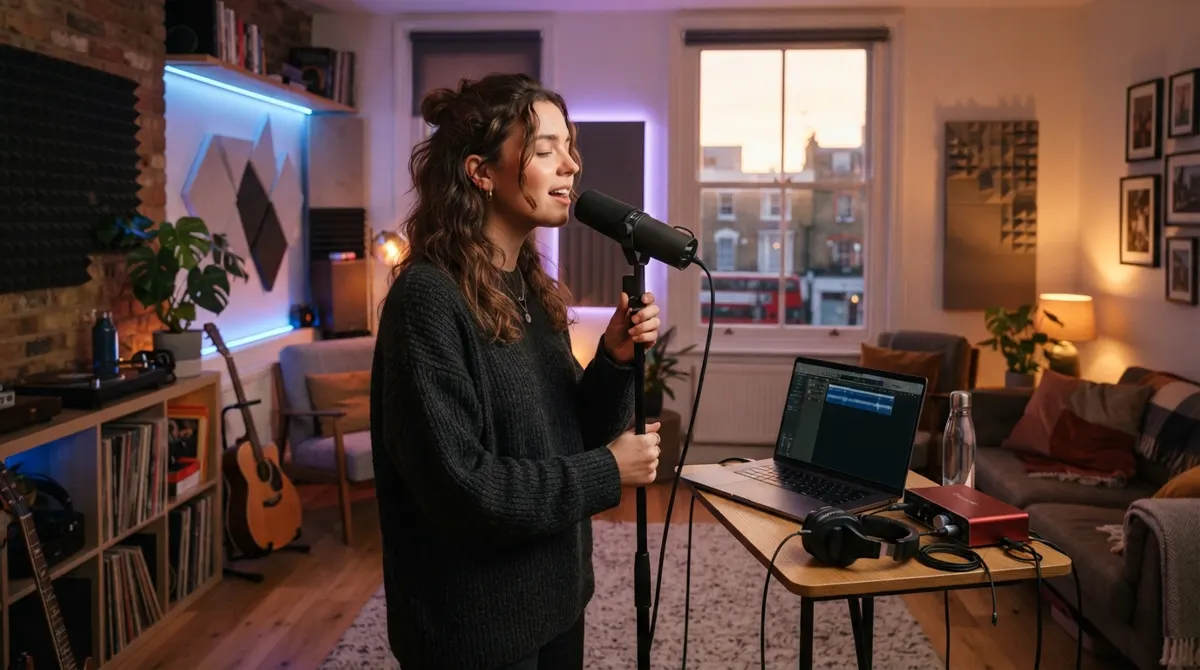
The shop does over £100,000 a year. It isn't passive, though. Custom tracks are one of its biggest income streams. A singer asks for a song in a different key, a mash-up, or a song that isn't in the catalogue yet, and the team checks the key and structure with them before recording. There's a paid Fast Track option that delivers within three days. Every one of those orders is skilled work. The catalogue also grows by 15 to 20 new tracks a week, and each of those has to be arranged and recorded.
The two parts work together: the catalogue brings people in and earns on its own, and the custom service earns more per order. A shop like this is a common pattern in Shopify design and development: a product range people can buy without talking to anyone, plus a clearly priced service for those who want something made for them.
Sources: Acoustic Backs and Tracks; Acoustic Backs and Tracks, Custom backing tracks.
Which route should you start with?
There are three realistic routes. The further along you go, the more work comes before the first sale, the longer that sale takes, and the more there is to look after.
The easiest route: a digital product
A course, a set of templates or a guide. It suits anyone who already answers the same questions for customers over and over. A bookkeeper could sell a set of spreadsheet templates for sole traders. A dog trainer could sell a short course on the first weeks with a new puppy. A wedding planner could sell a planning workbook. A sensible way to start:
- Pick one question people already pay you to answer. If customers ask it every week, there's demand.
- Make the smallest useful version. A short guide or a handful of lessons that solve one problem well beats a sprawling course that never ships.
- Offer it to people who already know you first. Existing customers and followers will tell you quickly whether it's worth paying for.
- Automate the delivery. Payment, access and receipts should all happen without you, so each sale really does cost you nothing.
- Give it a proper sales page. One clear offer, real examples of what's inside and an honest price. Our guide on how to make a website convert covers what makes people buy.
If a course is the right fit, Course Fusion is taking applications through its creator programme. It's free to apply, a person reads every application, and approved creators get AI build credits to draft their course, their own storefront and 50% of every sale.
Sources: Course Fusion, Become a creator.
The middle route: a shop plus a productised service
This is the Acoustic Backs and Tracks model. A catalogue sells without you, and alongside it sits a service with a fixed scope, a fixed price and a clear turnaround, ordered like a product rather than quoted from scratch each time. A calligrapher might sell printable wedding stationery templates plus custom place cards. A garden designer might sell planting plans for common plot sizes plus a made-to-measure plan for a customer's own garden.
The hardest route: your own app or software
This is Course Fusion itself. It needs the most work before the first sale, takes the longest to get there, and keeps needing attention afterwards: hosting, security updates, support and new features. In return it can serve far more customers without more of your time. AI coding tools have brought the cost down, which we cover in how AI has made custom software cheaper and faster.
Two tips if you're tempted. First, run the idea by hand before you build it: if you can't sell the result as a manual service, software won't fix that. Second, the best first piece of software is often one you use in your own business, because you already know the problem inside out. Our comparison of custom and off-the-shelf CRMs is a good place to start thinking about that.
Do you need to tell HMRC about side income?
Possibly. GOV.UK says individuals get a trading allowance of up to £1,000 a year, and if your gross trading income (before costs) is over £1,000, you need to register for Self Assessment. This is general information rather than tax advice, so check GOV.UK or speak to an accountant about your own situation.
Sources: GOV.UK, Tax-free allowances on property and trading income.
If you have a product or app idea and want a straight answer on how much of the work sits up front, Click Fusion Cloud is a web design, software and AI studio in Hertford, Hertfordshire, working with businesses across the UK. Our custom software and app development starts with that conversation, and you get a fixed quote before anything is built.
Quick answers
Is passive income online real?
Low-touch income is real, but fully passive income is rare. A course, a shop or an app moves most of the work to before the first sale, and after that you still handle support, updates and marketing.
What is the easiest way to start earning from a digital product?
Turn a question customers already pay you to answer into a short guide, template set or course. Offer it to people who know you first, and automate payment and delivery so each sale takes none of your time.
Are make-money-online courses a scam?
Not all of them, but be wary of adverts that present the seller's best results as typical. The ASA has ruled against money-making course ads that implied exceptional success was typical, and Citizens Advice warns that anything that seems too good to be true might be a scam.
Do I need to pay tax on side income from selling online?
You might. GOV.UK says individuals have a £1,000 trading allowance, and if your gross trading income is over £1,000 you need to register for Self Assessment. Check GOV.UK or an accountant for your own situation.
Want this done for you?
Software & App Development from Click Fusion Cloud
Built by our studio in Hertford, Hertfordshire, for businesses across the UK.
See our software and app development service